The Room Where Sound Goes to Die: On Silence, Monks and the Mind

Photo by Photo by Peter Herrmann on Unsplash on Unsplash
There is a room in Salford where sound goes to die. The anechoic chamber at the University of Salford is lined with foam wedges a metre deep, absorbs 99.9 per cent of the noise that enters it, and holds a Guinness World Record as one of the quietest places on Earth. People are invited to sit inside. Most last a few minutes. Some, reportedly, cannot bear it at all.
The chamber is famous for what you hear inside it: not nothing, but yourself. Your heartbeat. The rush of blood past your ears. A faint ringing that turns out to be your own nervous system, humming. Deprived of outside noise, the body becomes the broadcast. It is, depending on your temperament, either the most terrifying room in Britain or the most honest.
The Silence We've Lost
We talk endlessly about light pollution and dark skies, but noise is the quieter emergency. The Campaign to Protect Rural England has mapped England's tranquillity for years, and the picture is grim: genuinely quiet countryside is shrinking, hemmed in by motorways, flight paths and the ambient drone of a nation that apparently cannot bear to be still. Even our wild places hum.
Except some of them don't. The Surrey Hills — an Area of Outstanding Natural Beauty barely an hour from Waterloo — contains one of the country's officially designated 'quiet zones', tracts of land where the ambient noise stays low enough that your ears seem to recalibrate, like eyes adjusting to a darkened room. Walkers describe a strange sensation after twenty minutes: hearing their own footsteps, then their breath, then nothing at all. It's disorienting. Then it's delicious.
What the Monks Knew
Long before neuroscience caught up, the monastic tradition had silence figured out. The Trappists and Carthusians built entire lives around it — the vow, the hours of communal quiet, the understanding that silence isn't emptiness but a space where something else can occur. Medieval monasteries were, among other things, carefully engineered acoustic environments: thick stone, cloisters, chapels designed to hold a hush.
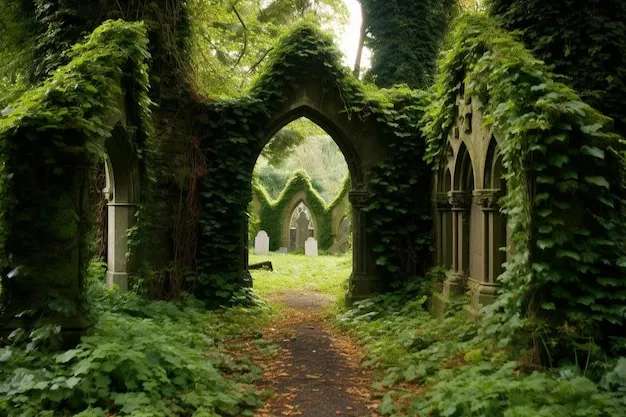
You can still visit that hush. Britain's remote chapels and churches — the ones off the main roads, unlit, unattended — are among the last reliably quiet rooms we have. Sit in one on a weekday afternoon and you'll notice the same thing visitors to Salford report, in gentler form: the arrival of your own interior noise. Thoughts you'd been drowning out. The mental equivalent of the blood in your ears.
What Silence Does to the Brain
The science is young but suggestive. A frequently cited 2013 study found that silence in mice promoted the growth of new cells in the hippocampus, the region tied to memory and emotion. Other research links chronic noise to elevated stress hormones and impaired attention, even during sleep. Silence, by contrast, appears to function less as an absence and more as a recovery state — a mode the modern brain almost never enters.
The catch, as the Salford chamber proves, is that we're bad at it. Total silence is uncomfortable because it strips away the constant low-level stimulation we use to avoid ourselves. Which is precisely the point, say the monks. And precisely the problem, say the rest of us.
A Practical Quiet
You don't need a world-record chamber. You need an hour and a door. Some suggestions from the hush-seekers:
- Find your local quiet zone. The Surrey Hills are the famous ones, but Northumberland's dark-sky country is nearly as silent as it is dark — the two tend to travel together.
- Visit a weekday church. Empty parish churches are open, ancient and acoustically perfect. Sit in the back. No one will bother you.
- Try the two-minute experiment. Sit somewhere safe, close your eyes, and do nothing. Notice how long it takes before the discomfort arrives, and what it's actually about.
The Other Thing We Forgot
Modern wellness rediscovered darkness — blackout curtains, candlelit evenings, the whole gothic self-care movement this site holds dear. But darkness and silence are siblings, and we've neglected one while courting the other. Both are absences we've been taught to fear. Both, it turns out, are where the interesting material lives.
The people who can't last in the anechoic chamber aren't weak. They're meeting something. And the people who seek out the quietest corners of Surrey, or a cold chapel on a Tuesday afternoon, aren't running away from the world. They're finally hearing it — the small, strange, unedited broadcast that plays underneath everything else, and only in the quiet.