Tea, Biscuits and the End of Everything: An Evening at a British Death Café
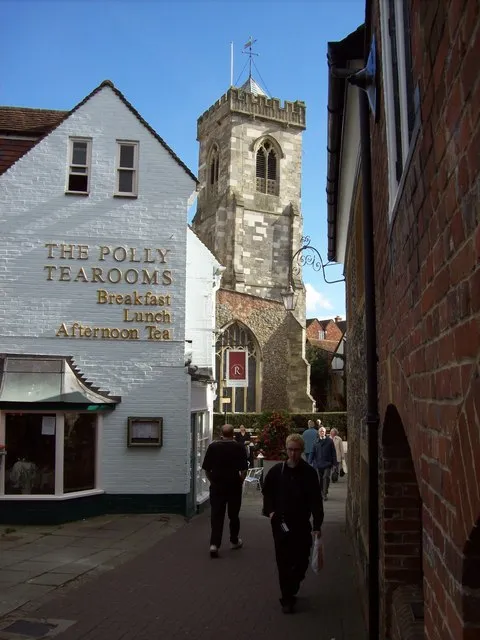
Photo: Chris Talbot, CC BY-SA 2.0, via Wikimedia Commons
The venue is a church hall off a Leeds backstreet, all folding chairs and tea urns and a noticeboard advertising a jumble sale. The topic, per the handwritten sign on the door, is death.
There are eleven of us. A retired nurse, a software developer in his thirties, a woman in an excellent velvet coat who has, she announces cheerfully, 'come for the atmosphere as much as anything'. We take our tea and our custard creams and we sit in a loose circle, and for the next ninety minutes we talk about dying — plainly, occasionally hilariously, and without once reaching for the words people usually reach for.
This is a death café, and it is part of a quiet movement that has been spreading through British cities for the past decade. The format originated with Jon Underwood, who held the first formal gathering in London in 2011, inspired by the Swiss café mortel. There are now hundreds of gatherings worldwide, run on a simple, deliberately unglamorous model: no agenda, no religious framework, no therapists moderating — just strangers, refreshments, and the one subject modern life keeps trying to reschedule.
What Actually Happens
If you're imagining something between a séance and a group therapy session, recalibrate. What happens is conversation, and it wanders. One woman talks about clearing out her mother's flat and the strange intimacy of other people's handwriting. A man in his sixties wants to know whether anyone else has thought about their own funeral playlist. Someone asks, half-joking, whether being buried in a cardboard box is environmentally sound, and for ten minutes we are deep in natural burial grounds, willow coffins and woodland sites in the Peak District.
The facilitator — a hospice worker volunteering her evening — intervenes rarely. Her main job, she tells me afterwards, is 'keeping the tea flowing and making sure nobody dominates'. The rules are minimal: confidentiality, no selling anything, no grief counselling pitches. This is not a support group, the movement insists, because framing it that way would imply you need fixing to be here.
And that's the point. Nobody in the circle is in crisis. They've come because talking about mortality is, apparently, something humans want to do, and almost nowhere in contemporary Britain lets them.
A Very Old Ritual in New Packaging
The gothically inclined reader will have spotted something by now. The death café presents itself as a modern innovation — and in format, it is. But the impulse underneath it is ancient, and peculiarly British.
The Victorians, whatever we think of their mourning jewellery and their post-mortem photography, at least lived alongside death. It was in the language, the dress, the architecture of every parish church. Our own memento mori tradition runs deeper still — the skull carved on tombstones, the hourglass, the 'memento mori' rings that turned mortality into something you wore on your hand. Death was domestic.
Then the twentieth century moved dying into hospitals and grief into a fortnight of statutory leave, and the conversation went underground. The death café is, in a sense, an attempt to carry the church hall back to the church hall — to return mortality to the ordinary rooms where it used to live, among folding chairs and tea urns and the gentle awkwardness of strangers.
There's something fitting about the settings these gatherings choose. I've heard of sessions in Brighton cafés, Manchester pubs, a Quaker meeting house in Bristol. Always ordinary rooms. Always tea. The ordinariness is the ritual.
Better Than an App
The wellness industry, needless to say, has noticed. There are now mortality-themed journalling apps, death positivity influencers, subscription boxes promising to help you 'make friends with the end'. Some of it is sincere. Much of it feels like the same old product with a skull on the packaging.
The death café is the opposite of that, which is presumably why it works. It costs nothing. It sells nothing. It cannot be optimised or gamified. You sit in a slightly cold room with people you will never see again, and you say the unsayable thing, and someone passes you a biscuit, and you leave lighter than you arrived.
The velvet-coated woman put it best as we packed up chairs. 'I've meditated. I've done the breathwork. This is the only thing that's ever made me feel calmer about all of it.' She nodded at the tea urn, the jumble sale notices, the dark window. 'It's just people, being honest, in a room.'
Just that. Which, if you think about it, is the oldest ritual we have.