Omens at the Checkout: Divination for People Who Haven't Bought a Tarot Deck Yet
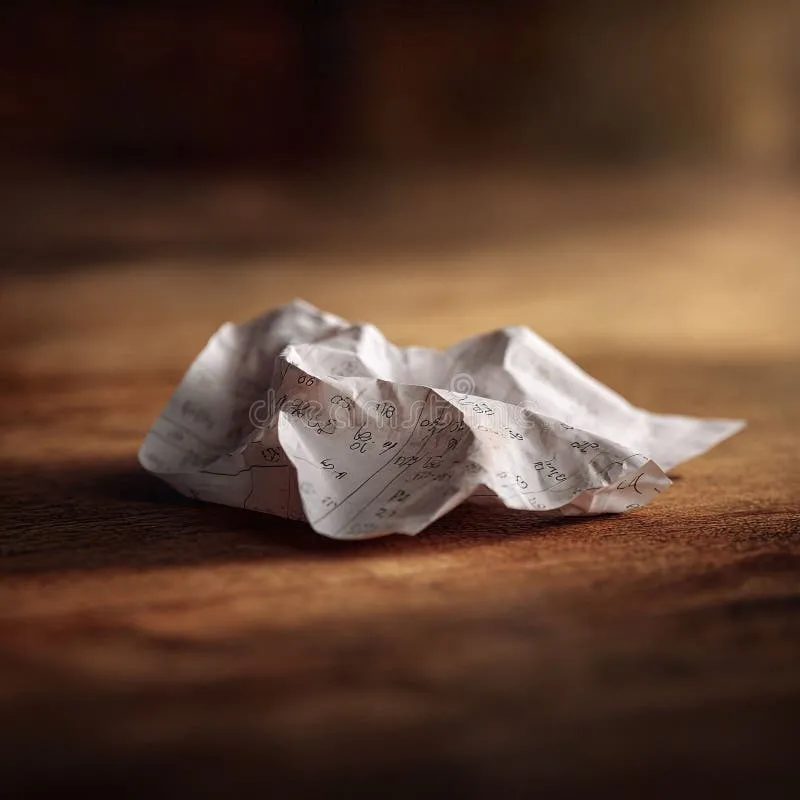
Photo: crumpled supermarket receipt on dark wooden table moody lighting, via thumbs.dreamstime.com
There's a particular kind of intimidation that comes with the occult section of a bookshop. The tarot decks sealed in plastic, the rune sets, the pendulums in little velvet pouches, all of it priced as though insight were a luxury good. You stand there, you hover, you buy a candle you don't need, and you leave.
Here's a small heresy, then, from the pages of this sanctum: you already own everything you need to start reading signs. It's in your coat pocket. It's the crumpled receipt from Tuesday's shop.
The Old British Habit of Noticing
Folk omens were never the property of mystics. They belonged to farm kitchens and fishing villages. A magpie counted one at a time — one for sorrow, as every British child learns before they learn their times tables. Bread refused to rise if the house was feuding. A picture falling from the wall meant a death, and woe betide anyone who put their shoes on the table.
These weren't decorative superstitions. They were a technology of attention. If you believed the loaf could sour on a bad mood, you paid attention to the loaf — and, by extension, to the mood. The omen was the excuse; the noticing was the practice.
That's the part the £40 decks get wrong, or at least leave out. Divination, at its root, isn't about magic leaking in from elsewhere. It's about the pattern-recognition engine in your own head finally being given permission to speak.
The Receipt Oracle
Try this. Next time you empty your pockets, don't bin the receipt straight away. Look at it the way you'd look at a tarot card — flat, unremarkable, but loaded if you let it be.
What's the total? Does it echo something — a date, an age, a number that's been following you? What's the last item on the list, the thing you almost forgot? What did you buy that you didn't plan to? The impulse purchase is the most honest item on any receipt; it's the one your conscious mind didn't curate.
I knew a woman in Hebden Bridge who kept every receipt from the month of January in an envelope and read them at the end of the month like a spread. Three cards. Three accidental purchases. She said it told her more about the state of her head than any journal entry. She might have been right. She might have been making meaning out of noise — but that's rather the point. Making meaning is the practice.
A Week of Small Portents
If you want to go further, spend one week treating ordinary frictions as messages. Not literally — nobody's saying the 43 bus is possessed. But treat each delay, each dropped coin, each wrong turn as a prompt to ask a question of yourself.
The stale loaf becomes: what am I letting go off in my life without noticing? The late bus becomes: where am I in a hurry that doesn't deserve it? The shop that's sold out of the one thing you came for becomes an invitation to improvise, which is a lesson most of us could do with relearning monthly.
Write them down. That's the whole ritual — a note in your phone, a line in a notebook. By Friday you'll have a small, strange ledger of your week, and you'll find it reads less like a shopping list and more like a mood map.
Attentiveness Is the Spell
The cynic will say this is all just pareidolia — the mind's habit of finding faces in wallpaper and prophecy in parking tickets. Fine. Let them. The cynic is also the person who walks to the station with their headphones in and can't tell you what colour the front door of their own building is.
Attentiveness is undervalued precisely because it's free. It can't be bought, branded or bundled into a starter kit. But a week of reading your ordinary days like an oracle — playfully, half-seriously, the way our ancestors half-believed their omens too — and something shifts. The world gets textured. The mundane starts offering its hand.
You can buy the tarot deck later, if you like. It'll still be there, still shrink-wrapped, still beautiful. But don't let anyone tell you the door to this stuff is locked, or that the key costs money.
It's a receipt. It's a magpie. It's a late bus on a Tuesday.
Look properly, and it's already talking.