Sit With the Shadows: An Argument for Dimming the Lights on Modern Wellness
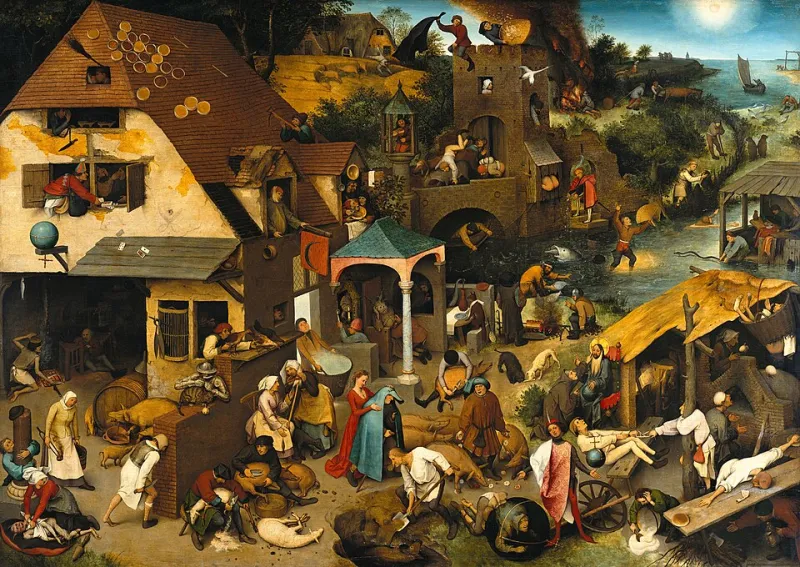
Photo: Pieter Brueghel the Elder, Public domain, via Wikimedia Commons
There's a particular kind of exhaustion that comes not from doing too much, but from being told to feel a certain way about it. You know the script. Rise and grind, but gently. Drink the lemon water. Reframe the setback. Smile — it's self-care, darling.
We'd like to respectfully suggest the opposite. Turn the lights off. Sit in the dark. Let the day be heavy if it wants to be.
The Tyranny of the Bright Side
Toxic positivity isn't a phrase we use lightly, but the phenomenon deserves the name. When every low mood is met with a demand for gratitude journals and every grief is rushed along to its 'silver lining', something honest gets lost. British culture, historically, understood this. The Victorians — hardly a bunch of hedonists — built entire rituals around sitting with sorrow. Mourning jewellery woven from a loved one's hair. Black-edged stationery. A prescribed period of dress that told the world, without apology, I am in the shadows for a while, and that is proper.
We're not suggesting you don a jet brooch to the office. But there's something almost radical in that old willingness to give darkness its due — to let grief, melancholy and quiet dread have a chair at the table rather than being shown the door.
Shadow Work Isn't a TikTok Trend (Though It's Also That)
The term 'shadow work' has been through the influencer machine of late, but its roots are older and stranger. The idea, in essence, is simple: the parts of yourself you refuse to look at don't vanish. They wait. They hum under the floorboards of the psyche. And the only way to make peace with them is to bring a candle down into the cellar and have a proper look.
This doesn't require a therapist, a tarot deck, or a £40 moon-water kit — though none of these are prohibited. It requires honesty and low lighting, mostly. A notebook. An evening with no screens. Ask yourself what you're avoiding. Then, crucially, don't flinch when the answer arrives.
The Practical Goth's Guide to Dim Self-Care
- Light one candle, not six. This is about atmosphere, not a séance (unless you fancy one). A single flame gives the eyes something to rest on and the mind permission to slow.
- Choose melancholy music on purpose. A minor-key playlist isn't wallowing; it's companionship. The British have always known a good sad song can hold you better than a pep talk.
- Walk at dusk, not golden hour. The hour before full dark — the blue hour — is liminal, and liminal spaces are where reflection comes easiest.
- Keep a 'shadow journal'. Not gratitude. Not affirmations. Just the true ledger: what hurt today, what you resented, what you're afraid of. Read it monthly. Watch it lose power on paper.
- Stop apologising for a quiet night in. A black tea, a heavy novel, the curtains drawn at 7pm in November. This is not failure. This is hibernation, and it's free.
Why the Dark Is the Point
Here's the thing about sitting with the dark: it doesn't actually make life darker. It makes it truer. A self-care regime built only on light — on forced optimism, on curated mornings, on relentless upward spirals — is a house with no foundations. When the inevitable storm comes, the good vibes blow away first.
But a practice that includes the shadows? That holds. The candle flickers, the room settles, and you discover that the dark was never empty. It was just quiet — and you'd forgotten how much you needed the quiet.
So dim the lights. Light the candle. Let the day be what it was. The sun will come up regardless; it always does over Britain, even through the drizzle. You don't have to greet it with a grin. You can greet it with a nod — from a person who spent the night being honest with themselves, and survived it.
That, we'd argue, is the real inner sanctum.