Read Alone, After Midnight: Seven British Ghost Stories That Make Peace With the Dark
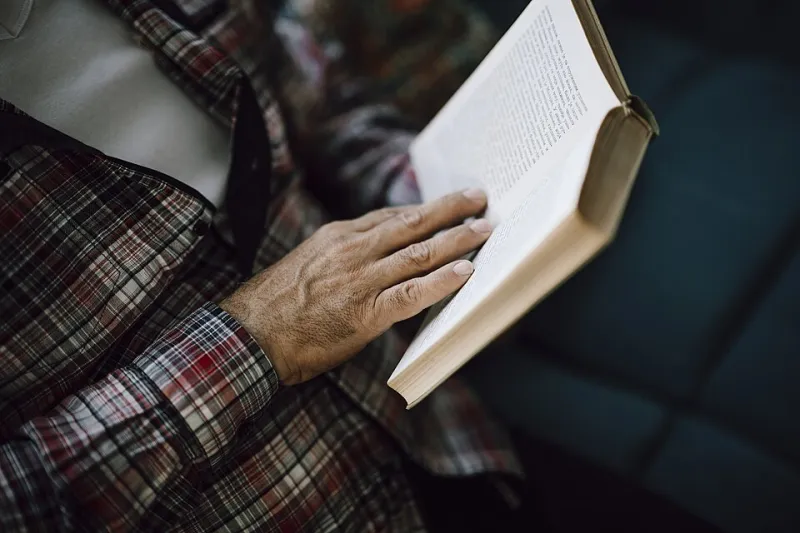
Photo: Nenad Stojkovic, CC BY 4.0, via Wikimedia Commons
Let me make an unfashionable admission: I don't read ghost stories to be frightened. I read them to feel less alone, which is either a paradox or the whole point, depending on the hour.
There's a particular pleasure in the British ghost story that no other tradition quite manages. It's the weather, partly. It's the architecture — all those lodges, vicarages, college rooms and seaside hotels with one spare bedroom nobody mentions. But mostly it's the quiet. The great British spectres rarely shriek. They wait. They stand in fields and sit in armchairs and tap patiently at windows, and in their patience they teach us something about sitting with our own company that no wellness podcast has managed.
Here are seven of the best, each paired with the question it left me chewing on long after the lamp went out.
1. The Woman in Black — Susan Hill
Hill's marshland is the real protagonist: the causeway that drowns twice a day, the fog that swallows the road, Eel Marsh House cut off from the world by water and time. It's a book about being unreachable — and about what surfaces when you are.
The prompt: When was the last time you were genuinely cut off from everyone? What did you meet in that silence?
2. Ghost Stories of an Antiquary — M.R. James
James wrote his tales to be read aloud to friends by candlelight in King's College, which tells you everything: these are communal stories about solitary men. His scholars dig too deep into old texts and disturb something patient. The horror is wonderful, but the underlying warning is about curiosity without company.
The prompt: What am I digging into alone that I should be talking about with someone?
3. The Haunting of Hill House — Shirley Jackson
Technically American, but the gothic grammar is thoroughly British, and no book has better described loneliness as an invitation. Eleanor arrives at the house with nothing — no ties, no future, no one who'd notice her absence — and the house notices her very well. 'Whatever walked there, walked alone,' Jackson opens, and then spends three hundred pages complicating that.
The prompt: Is my solitude chosen, or have I just stopped being asked?
4. The Turn of the Screw — Henry James
An isolated governess, two eerily well-behaved children, a country house in Essex, and figures on the tower that may or may not exist. Henry James's great trick is that the ghosts might be entirely in the narrator's head — which makes the book less about hauntings than about the stories we tell ourselves to give our isolation a plot.
The prompt: Which of my anxieties is a real figure on the tower, and which is a story I've written to make the silence make sense?
5. Cold Comfort Farm — Stella Gibbons
Yes, it's a comedy. But Gibbons's parody is also the most affectionate map of British gothic tropes ever written — the doomed farm, the madwoman in the attic, the brooding relatives — and sometimes the best way to love a genre is to laugh with it. Read it on a grey Sunday when the doom feels too heavy.
The prompt: Which of my own 'dark moods' deserve solemnity, and which just need a good airing and a cup of tea?
6. The Owl Service — Alan Garner
Set in a Welsh valley where an old myth — a woman made of flowers, hunted and re-hunted across centuries — replays itself through three teenagers one summer. Garner writes the landscape like a memory the land can't shake. It's a book about inherited sadness, and about how patterns repeat until someone chooses, deliberately, to break them.
The prompt: What pattern in my life is older than I am — and is it mine to continue?
7. The Little Stranger — Sarah Waters
Hundreds Hall, a crumbling Warwickshire estate in the late 1940s, haunts itself with the grief of a class dying slowly. Waters's ghosts are ambiguous in the best way: the house is certainly sick, but is it the building or the world around it that's rotting? A perfect winter read for anyone who's ever grieved something — a place, a version of themselves — that was already gone.
The prompt: What am I still visiting out of loyalty when the visit ended long ago?
Why This Reading Matters
There's a reason these stories endure, and it isn't the shivers. It's that they treat darkness as a room with furniture in it — a place you can actually sit, rather than a void to be LED-lit and optimised away.
Modern life has a horror of the unlit hour. Every screen glows, every shop window beams, every app has a 'dark mode' that's still, let's be honest, rather bright. The ghost story offers a different arrangement: you, a lamp, a book, and the polite company of the unknown.
So try it. Pick one from the list. Wait for a night with proper weather — rain on the glass, radiators ticking. Make tea or pour something amber. Read alone, after midnight, with the rest of the house asleep.
You may find, as I have, that the stories aren't really about the dead at all. They're about the living, sitting quietly in the dark, discovering that the dark sits quietly back.