After Dark, Before Sleep: Building a Midnight Ritual for the Gothic Soul
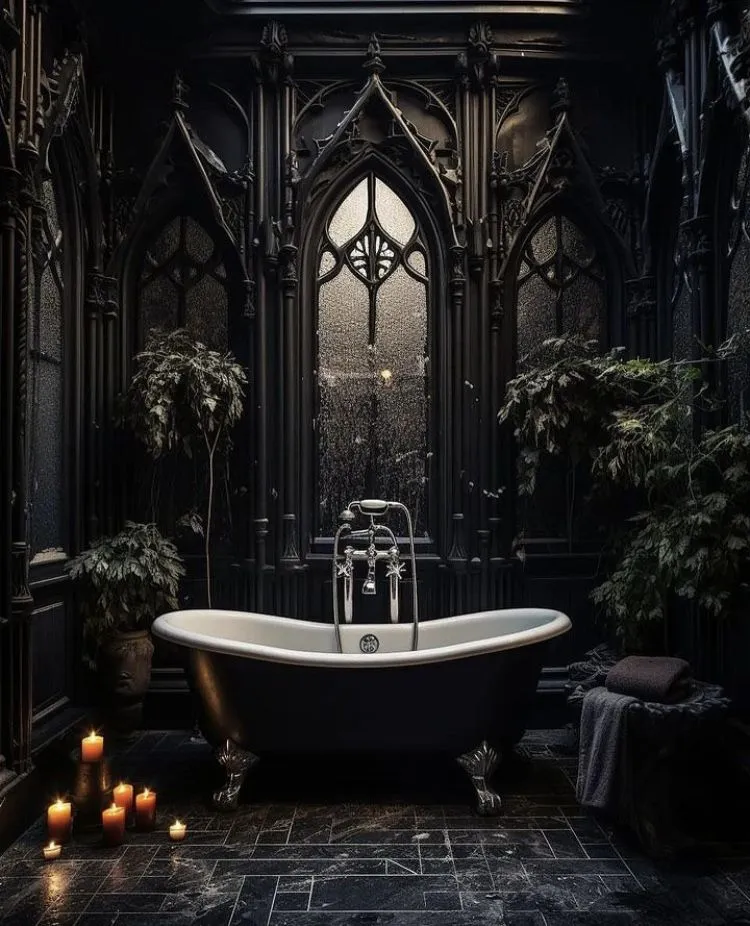
Photo: candlelit bathtub dark bathroom moody gothic atmosphere, via i.pinimg.com
There's a particular hour — somewhere past eleven, when the last delivery van has rumbled off and even the neighbours have given up on the telly — when the house becomes a different country. The heating ticks. The curtains hold back the streetlight. And you, finally, belong entirely to yourself.
Most wellness culture wants nothing to do with this hour. It's all 6am cold plunges and lemon water and journals with the word 'glow' embossed on the cover. But for a certain temperament — the one drawn to velvet, to folklore, to the satisfying gloom of a British November — self-care doesn't live at sunrise. It lives after dark.
Here's how to build a ritual that honours that.
Begin With the Lights, Not the Intentions
Before anything else, change what the room is doing. Overhead lighting is the enemy; it flattens everything it touches. Instead, work in layers: a candle or three, a salt lamp if you own one, fairylights draped somewhere unbothered and dusty. You're not trying to see properly. You're trying to see differently.
There's old logic in this. Our ancestors marked the liminal hours — dusk, midnight, the turning of the year — with flame because fire was the only threshold between the household and the vast dark beyond it. Recreate that threshold and the mind follows. Call it ambience, call it magic; the effect on the nervous system is the same either way.
The Bath as Sanctuary
A candlelit bath is gothic self-care's centrepiece, and it deserves more ceremony than a splash of bubble bath.
Draw the water hot and dark the room down first. Add salts — Epsom is cheap and cheerful, but a spoonful of dried lavender or rosemary from the garden windowsill does something no product can. In British folk practice, rosemary was laid under beds and tucked into bundles for remembrance and protection. Steep it like tea in the water and you're participating in something older than any spa.
Some practitioners keep a sealed jar of moon-water — tap water left overnight under a full moon, ideally on a windowsill where the light can actually reach it — and add a splash to the bath or use it afterwards on the face. Is it doing anything chemically? Almost certainly not. Is it doing something ritually? That's rather the point. Ritual is attention made physical.
Stay until your fingertips wrinkle or the candles gutter, whichever comes first.
Shadow Journaling: Write Toward What You Avoid
Once you're dry and wrapped in something oversized, sit somewhere dim with a notebook. This is shadow journaling — not a gratitude list, not a to-do list, but a conversation with the parts of yourself that only surface after dark.
A few prompts to begin:
- What am I pretending not to know?
- Which of my fears has actually kept me safe, and which has just kept me small?
- If the version of me that exists at midnight could speak to the morning version, what would she say?
Write by candlelight if your eyes allow. The dimness matters — it lowers the internal volume, the way a darkened pub makes confessions easier than a bright café ever could. Don't reread what you write for at least a moon cycle. These pages are for the shadow, not the critic.
Soundscapes for the Small Hours
Silence at midnight is rarely silent — the boiler hums, the foxes scream, a car door slams three streets away. Rather than fight it, curate it.
Some options that suit the gothic temperament: field recordings of winter wind through bare woodland; the slow, tidal drones of artists like Sarah Davachi or the haunting choral works on any good 'dark ambient' playlist; or, if you want something with roots, old British folk recordings — the Watersons, Anne Briggs — sung in that unaccompanied, spine-prickling way that folk song was always meant to be heard.
Keep the volume just below comprehension. You want the sound to feel like weather, not entertainment.
A Winter Solstice Ritual, Step by Step
The longest night of the year is the natural high holiday for anyone who prefers their wellness dim. Here's a simple ceremony for the evening of the solstice (21 December, give or take):
-
At dusk, switch everything off. Lights, screens, the lot. Sit in the genuine dark for ten minutes. Let your eyes adjust. Note how the dark is never truly empty.
-
Light one candle for the year leaving. Name, silently or aloud, what you're ready to release. Watch the flame. When you're ready, blow it out.
-
Run the bath. Rosemary, salt, whatever dried botanicals you have. Add your moon-water if you've kept some. Soak. No phone. No book, if you can bear it — just water and flame.
-
Dry, dress in something soft, and light a second candle. This one is for the returning light. Write one intention on a slip of paper — not a resolution, an intention — and place it beneath the candleholder to burn down beside it overnight.
-
Close with something warm. A mug of something spiced, a few pages of a good ghost story, bed. The point is to end gently, the way the old year should.
That's the whole practice: dark, flame, water, word, warmth. It costs almost nothing and asks only that you treat the longest night as something worth marking rather than merely enduring.
Because that's the quiet secret of gothic self-care. It isn't about gloom for gloom's sake. It's about refusing the idea that restoration must be loud, bright and sold to you in daylight. Some of us refill in the dark. The solstice simply gives us permission to say so out loud.