Where the Lane Swallows the Light: Walking Britain's Holloways After Dusk
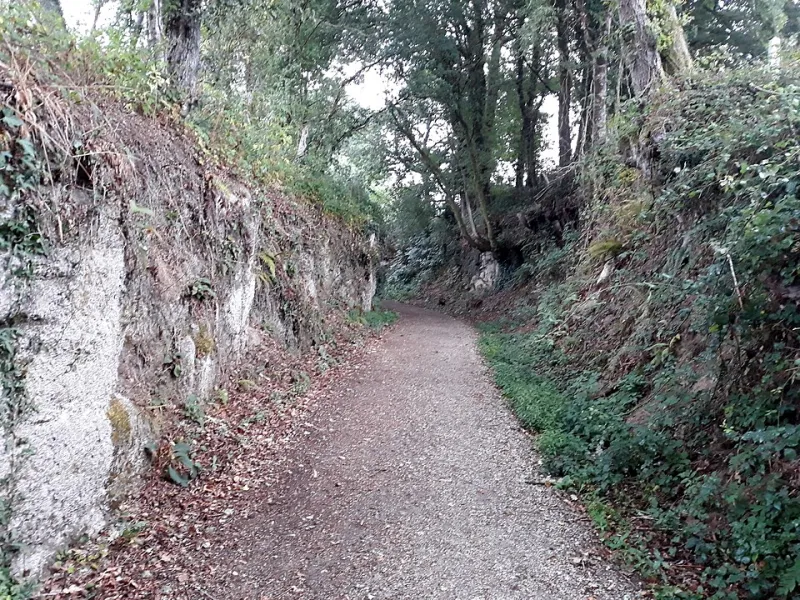
Photo: Simon Burchell, CC BY-SA 4.0, via Wikimedia Commons
Britain is criss-crossed with lanes that have sunk below the level of the fields. They are called holloways — from the Old English hol weg, a hollow way — and they are not really footpaths at all. They are grooves in the land, cut by feet, hooves, cartwheels and running water over centuries. Some are twenty feet deep. Some are tunnels of root and moss. All of them ask you to go slower than you probably intended.
This is not a route for bagging a summit or closing a ring on a fitness app. A holloway is a place to be humbled by repetition. You are walking through the accumulated passage of people who are mostly gone. The lane remembers them in the only way a lane can: by wearing down.
What a holloway asks of you
Go at dusk if you can, or in the blue hour before true dark. Take a head torch but use it sparingly — a red filter is kinder to your night vision and to wildlife. Wear boots with grip. Take a walking stick if the ground is wet, because these lanes hold water like a gutter and the mud can be sly. Tell someone where you are going. Do not wear headphones. The point is to hear the place: the drip, the shift of a branch, the sudden hush when the lane narrows.
Countryside etiquette matters more than ever after dark. Stick to public rights of way. Close gates — the latch, then the gate, then the latch again. Do not climb walls to find a better view. Give livestock a wide berth, especially at night when they are easily startled. Take your litter home, including the tissue you forgot you had. Do not shine a torch into hedgerows for long; there may be a nest, a roost, a small life trying to sleep.
Seven lanes for a slow, dark walk
You do not need to travel the length of Britain to find one. Start with the holloways nearest to you — the Ordnance Survey map will show them as deep-cut green lanes, often marked as bridleways. But if you want a pilgrimage, here are seven places to begin.
1. Hell Lane, near Symondsbury, Dorset. A properly famous holloway, all gnarled roots and high banks. It is busy in daylight and genuinely eerie at dusk. Go midweek, go late, and take the muddy section slowly.
2. The sunken lane below Shute Hill, East Devon. Less celebrated, more forgiving. The banks are full of ferns and the lane opens suddenly onto a view that feels like a secret. Good for a first solo dusk walk.
3. Holloway Lane, Shropshire. A quiet, green-arched groove that seems to belong to another century. The kind of lane where you stop hearing traffic and start hearing your own footsteps.
4. The bridleway at Selworthy, Somerset. Not a classic deep holloway all the way, but the wooded sections close over you like a roof. Walk it in late autumn when the leaves are down and the structure of the lane is visible.
5. The green lane beneath Chanctonbury Ring, West Sussex. The chalk downland here is full of old tracks, and the lane has that strange downland quality of feeling both exposed and enclosed. Go on a clear night if you want the moon; go on a misty one if you want the haunting.
6. The holloway near Rievaulx, North Yorkshire. The abbey ruins are the tourist draw, but the lanes around them have their own gravity. Expect cold, clean air and the sense that the land has been walked for a very long time.
7. The lane to Lullington, East Sussex. A modest, downland holloway that rewards patience. The village is tiny, the church is smaller still, and the walk back in the dark is the sort of thing you remember for years.
These are starting points, not guarantees. A lane changes with the season, the weather and your own mood. The best holloway is often the one you can reach on foot from your own door.
The lane as moving meditation
There is a fashionable way to walk: measured, monitored, optimised. A holloway resists all of it. The ground is uneven. The light is poor. You cannot stride out. You have to pick your way, and picking your way is a kind of attention.
This is why holloways feel haunted. Not because ghosts are necessarily present, but because the lane is a record of use. Every dip in the path is a footstep that happened before you were born. Every exposed root is a century of soil washing away. You are not walking through a landscape; you are walking through a memory that has been pressed into the ground.
So walk with attention rather than a goal. Stop when the lane gets dark. Put your hand on the bank. Listen to the water moving under the mud. Notice the moment when the lane feels like a tunnel and the fields above feel like another world. Then keep going, slowly, until you come out the other side.
You will get muddy. That is part of it. You will probably feel a little foolish, standing in a wet ditch in the dark. That is also part of it. The lane does not care about your step count. It only asks that you go through it, and that you leave it as you found it.
And when you get home, leave the light off for a minute before you put the kettle on. Let the dark settle. The lane will still be there tomorrow.