Controlled Rot: Inside Britain's Cupboards of Quiet Transformation
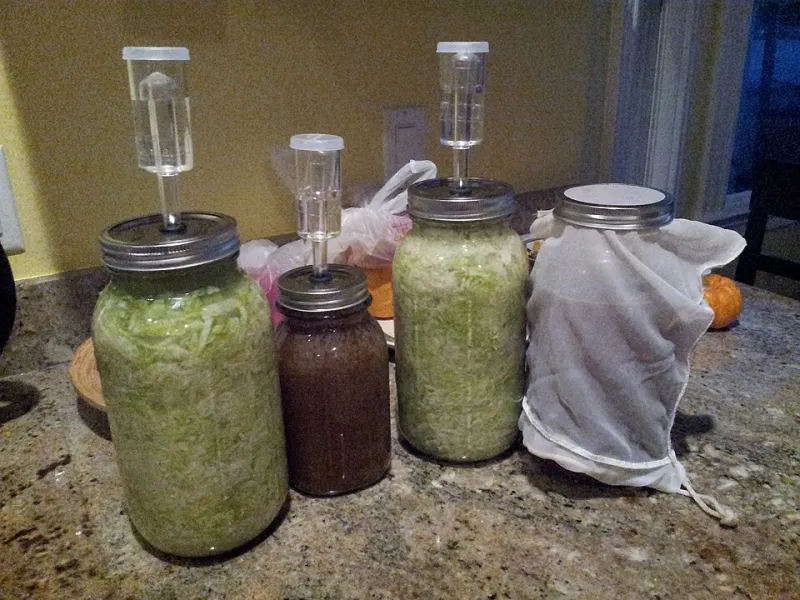
Photo: User:Greg G, CC BY-SA 3.0, via Wikimedia Commons
There is a moment, about four days into a batch of sauerkraut, when you lift the cloth and the smell reaches you. Briny, faintly sour, something almost fungal underneath. Your grandmother would have called it off. Your gut microbiome would disagree — and so, increasingly, would a quiet army of British home fermenters who have decided that the path to wellness runs directly through decay.
We are, apparently, a nation of rot enthusiasts now. Farmers' markets in Frome and Hebden Bridge groan with kimchi in kilner jars. Kombucha scobys are passed between friends like sourdough starters once were, wrapped in tea towels and accompanied by instructions whispered like spells. Black garlic — whole bulbs aged until they turn tar-black and sticky-sweet — has drifted from Japanese kitchens into British delis. And mead, that most medieval of drinks, is being brewed in city flats by people who have never kept a bee.
The Alchemy of Letting Things Go Off
Here is the thing the wellness industry keeps missing: fermentation is not a hack. It is a surrender. You cannot rush it, optimise it, or hack it into a five-minute morning routine. You prepare your vessel, salt your vegetables properly, submerge them beneath their own brine, and then — this is the hard part — you do nothing. For days. Sometimes weeks.
The microbes do the work. You simply create the conditions and then practise the rarest skill of all: leaving something alone.
It is no accident that this appeals to a certain temperament. If you are the sort of person who finds comfort in candlelight, who thinks the hour before bed is sacred, who suspects that the dark has more to teach than the light — fermentation will feel familiar. It is transformation through controlled decay. Death that leads somewhere. A small, vinegar-scented memento mori on the kitchen counter.
Cathedrals of Decay
I spoke to fermenters across the country about why they do it, and the language they used was strikingly consistent. One Bristol brewer described her cupboard of kombucha jars as "a small cathedral of decay — dim, quiet, doing its own thing whether I watch or not." A Leeds allotment-holder who makes sauerkraut from his surplus cabbages told me the fermenting shelf in his pantry is "the only part of my life where patience is actually rewarded."
There is something liturgical about the practice. The weekly check. The burping of jars, releasing gas with a soft sigh. The way a scoby thickens over months, a pale, gelatinous accretion — a living record of every batch that came before. People keep 'scoby hotels' now, jars of dormant mothers waiting in the dark like sleeping saints, ready to be revived.
This is self-care, but not as the glossy magazines understand it. No bath bombs. No journalling prompts. Just salt, time, and a willingness to let something change in the dark without your supervision.
Beginning Your Own Small Corruption
If this speaks to you, the entry point is gloriously cheap. A jar, some salt, a cabbage.
Sauerkraut is the traditional gateway. Shred a cabbage, weigh it, add two per cent of that weight in good salt, then massage until the brine draws out. Pack it into a clean jar, press it down until the liquid rises above the veg, weight it (a small glass or a folded cabbage leaf works), and cover with a cloth. Keep it somewhere cool and out of direct light — a north-facing windowsill, an unheated cupboard. Taste after a week. Wait longer if you like it sharper. Some of the best batches take a month.
Kombucha asks slightly more of you: a scoby, strong sweet tea, and roughly a fortnight of patience. But scobys are given away freely in online communities and local groups — nobody sells a first one. It's considered bad luck, or at least bad manners.
Black garlic requires only a rice cooker on 'keep warm' and forty days of not asking questions. Whole bulbs, wrapped lightly, left in the warm dark until they turn black and molasses-sweet. It is the closest thing to alchemy available in a domestic kitchen.
Mead — honey, water, yeast, time measured in months rather than days — is for those who want their patience rewarded with something drinkable at the winter solstice. Start in September, and you have something worthy of the season by the time the dark properly settles in.
The Virtue of Not Knowing Yet
What fermentation teaches, more than any gut-health benefit, is comfort with uncertainty. You will not know if a batch has worked until it has. Sometimes mould wins. Sometimes the kraut turns out cloudy and strange and magnificent. The failure rate is real, and the fermenters I spoke to had made peace with it — the compost heap takes the losses, and the next jar begins again.
In a culture obsessed with optimisation and immediate results, there is something quietly radical about tending a process you cannot see, cannot control, and cannot hurry. The Victorians had their pantries; our great-grandmothers had their crocks. We have, somewhere along the way, been taught to fear the bubbling jar. Perhaps it's time to open the cupboard, breathe in that slightly crypt-like air, and remember: not everything that rots is lost. Some of it is just becoming.
Start small. Salt well. Keep the lights low.
The dark does the rest.