Below Stairs, Below Notice: In Praise of the Room You Leave Alone
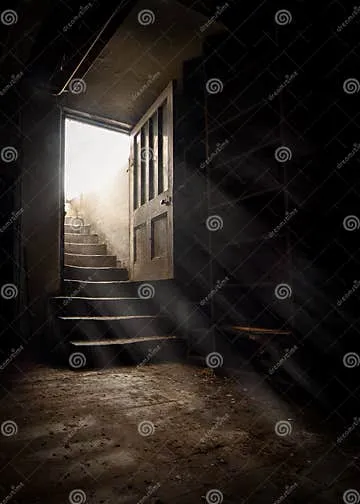
Photo: dark stone cellar steps old british house moody light, via thumbs.dreamstime.com
My grandmother's house in Sheffield had a cellar you entered through a door in the scullery, down three steps that had worn into shallow bowls from a century of feet. Nobody decorated it. Nobody cleaned it beyond what was necessary. A jar of pickled onions from a year nobody could date sat on the shelf, and beneath the stairs that led back up, there was a darkness so complete it seemed to have texture.
We called it the damp corner. We were, I now realise, being polite.
The Architecture of Avoidance
Older British houses were built with a shadow built in. The cellar, the coal hole, the bricked-up pantry behind the larder wall, the cupboard under the stairs that every child knew was the first place the boggart would live. Victorian and Edwardian builders understood something we have since engineered out of our homes: that a house needs a place the daylight doesn't reach, and that the people living in it need somewhere to put the things they'd rather not look at too often.
The coal hole is the purest example. A small, often domed chamber off the pavement or the back yard, into which the coalman poured the winter's fuel through a cast-iron plate in the wall. It was dark by design, damp by accident, and slightly feared by everyone. Children were warned off it. Cats wouldn't go in. And yet the whole house depended on it, drew its warmth from the black mass that sat there breathing quietly through the winter.
We don't burn coal much anymore. But the rooms remain, in terraces and semis from Durham to Dorset, mostly converted into boiler cupboards, wine stores, or — in the best cases — left exactly as they are.
What the Declutterers Miss
Modern domestic advice is a war on darkness. LED strips under every cabinet, motion-sensor lights in the hallway, a phone torch always to hand. The trendiest interiors are, functionally, laboratories: everything lit, everything visible, everything accountable. Even our relaxation is lit — salt lamps, sunset bulbs, the warm glow of a ring light as we explain our evening routine to strangers.
There's nothing wrong with light. But a house in which every corner is illuminated is a house with nowhere to hide from yourself, and I mean that in the least therapeutic sense possible. Some things ripen in the dark. Some thoughts need somewhere to be put down, the way our grandparents put down the preserves, and a room you visit rarely and briefly is as good a place as any.
The decluttering movement would have us sort the cellar into labelled boxes. I'd argue the opposite: keep one room unsorted. Unimproved. Slightly feared.
How to Keep a Dark Room
You don't need a Victorian cellar. You need a threshold and a bit of neglect. Some principles, gathered from those who practise this quietly and without a name for it:
- Choose the room that already frightens you slightly. The one with the low ceiling, the smell you can't identify, the light switch that doesn't work. It has chosen you.
- Resist the urge to renovate it. No dehumidifier, no painted breeze block, no bunting. Repairs are fine; improvements are a category error.
- Visit with intention. Once a season, perhaps. Take something down — a box, a jar, an old coat — and sit with it for five minutes in the dark before deciding.
- Let it be cold. A dark room should feel like a season, not a temperature setting.
- Tell no one. Or rather, tell everyone and expect them to look at you oddly. Both are part of the ritual.
A Threshold, Not a Escape
I want to be careful here. This isn't an argument for hoarding, or for damp, or for the romanticisation of mould. Cellars genuinely do need ventilation, and there's nothing mystical about black spot on a wall that a dehumidifier would sort out in a fortnight.
It's an argument for a boundary. The everyday self — the lit, listed, optimised self — lives upstairs with the rest of us. But somewhere below, or behind a door that sticks, there should be a room that doesn't know about your goals. It smells of stone and old paper and, yes, something else. You go down, you stand in the dark for a moment, and you come back up changed by exactly nothing measurable.
Our ancestors put their coal there. We can put whatever it is we're carrying.
The house knows the difference. It has always known the difference.