The Shelf of Good Intentions: Keeping Books You Will Never Read
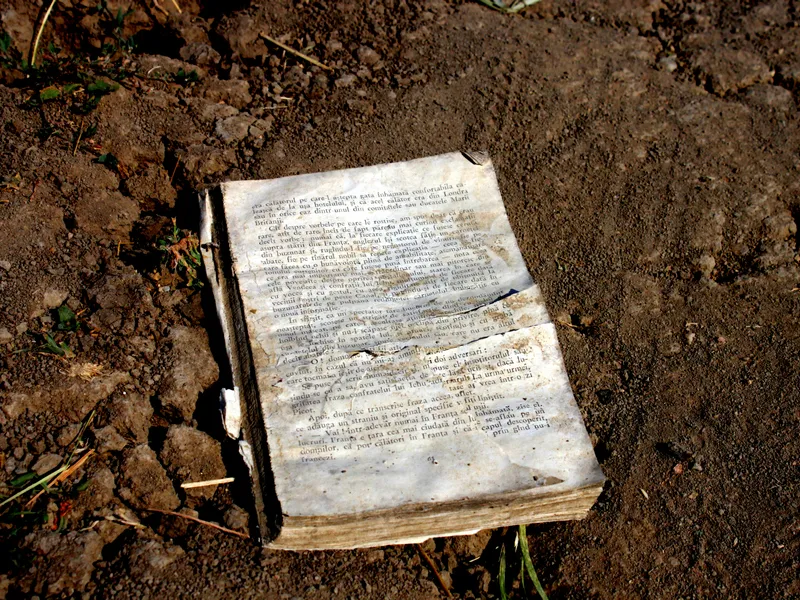
Photo: Emilian Robert Vicol from Com. Balanesti, Romania, CC BY 2.0, via Wikimedia Commons
Every house has one. The shelf that means well. The Proust nobody started. The history of Byzantium bought in a phase of optimism. The novel someone pressed into your hands at a difficult time and which you have now carried through three house moves like a stone in a pocket.
We usually call this a backlog. I would like to propose a different word: a shrine.
The problem with the guilt shelf
There is a particular modern shame attached to unread books. Reading apps count what you have finished. Online shelves display your progress to strangers. People announce their reading targets in January with the energy of someone starting a diet, and by March the whole thing has curdled.
The arithmetic is unforgiving once you actually do it. Say you read a book a fortnight — generous, given the state of everything. Say you are thirty. That is perhaps a thousand books left, at most, and the average household owns more unread titles than that already. The numbers do not balance. They were never going to. No amount of speed-reading fixes the fact that there are more books than there is life.
Which means the guilt is not a reading problem. It is an arithmetic misunderstanding dressed up as a moral failing.
What the unread actually are
An unread book is not an unfinished task. It is potential, held in physical form. It sits on the shelf as a record of a question you once found interesting enough to spend money on — a door you have not yet decided to open, and which stays open regardless.
That is a strange and rather lovely thing to own. Most of our hopeful objects get used up. The unread book just persists, patient as a houseplant, requiring nothing, quietly representing a version of you who has read it. That version is not a better person. They are just further along a road you might still walk.
And some of them you will keep for reasons that have nothing to do with reading at all. The book from a grandparent. The guide to a place you visited once. The cheap paperback you bought the week everything changed. Those are talismans, and it is fine to admit it.
Building the shrine properly
You do not need a whole room. A single shelf will do, or a windowsill, or the top of a narrow bookcase in the spare room. The point is the deliberateness, not the size.
Choose the shelf. Pick one that is not in your main eyeline. You are not building a reproach. A hallway shelf, a bedroom corner, the space under a lamp.
Curate ruthlessly. Ten to twenty books, no more. Not every unread book in the house — just the ones that genuinely mean something, or that you genuinely, still, secretly want to read. The rest can be donated without ceremony. A shrine needs a boundary or it is just a storage problem.
Add a candle. A stub in a holder is enough. It is not, in truth, for the books. It marks the shelf as somewhere you stop rather than somewhere things accumulate.
Give it one object that is not a book. A stone from a beach. A photograph. A pressed leaf from an autumn walk. Something that is not asking you to complete it.
A minute of acknowledgment
Once a week, or whenever you remember, stand at the shelf for a minute. Light the candle if you like. Pull one book out. Read the first page, or the back, or just hold it.
Do not put it down and pick up another. Do not add it to a list. The minute is the whole ritual.
Then put it back and walk away. The shelf stays as it was — potential, unhurried, unread. You have acknowledged it and given it nothing else, and that is the correct amount.
Twice a year, take one down properly, and give it the first fifty pages. If it holds you, finish it and it leaves the shrine. If it does not, it goes out the door. Shrines should be able to lose members without collapsing.
What it teaches
Patience, first: the shelf waits and does not resent. Mortality, second: the arithmetic is real, and the shelf is a surprisingly gentle way to look at it. You will not read all of them. You will not read all of anything. But you have chosen which doors to keep open, and that is a decision about a life.
And third — the pleasure of the impossible list. There is something almost restful about a project that cannot be completed. It takes the pressure off the evening. It lets you read a bad thriller without a sense that you are falling behind on your Byzantine history.
The books stay. The candle burns down. Nothing is finished, and nothing needs to be.
That is what a shrine is for, in the end: a place to put the things you are not ready for yet, and to be quietly glad they are still there.