Let It Rot in Peace: Why Growing Mushrooms in the Dark Is Britain's Slowest, Quietest Hobby
There is a particular kind of silence in a cellar at eleven at night. Not the absence of noise, exactly — a drip somewhere, the hum of a neighbour's boiler — but a silence you can lean into. Somewhere in that darkness, on a shelf of straw and spent coffee grounds, a block of grey oyster mushrooms is deciding whether it's ready. There is nothing you can do to hurry it. That, more or less, is the whole appeal.
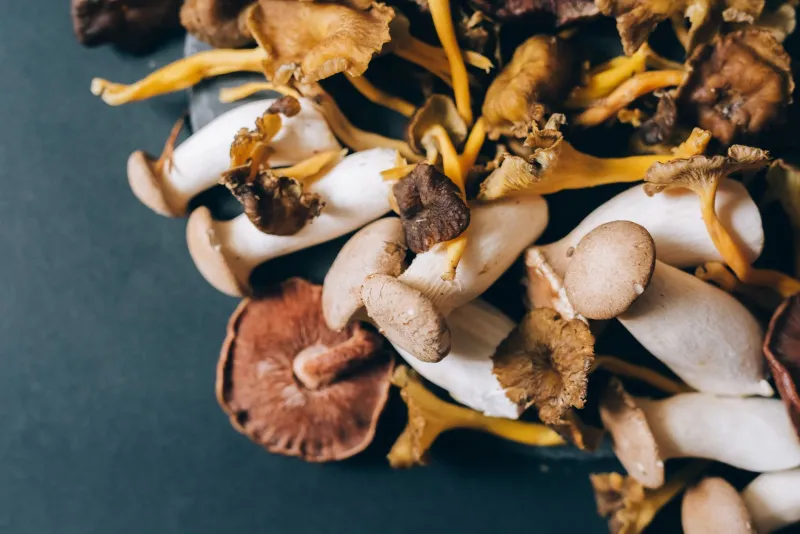
Home mushroom growing has quietly become one of Britain's fastest-spreading hobbies. Not loud, naturally — mushrooms don't do loud. But scroll any allotment forum or peruse the stalls at a Bristol farmers' market and you'll find the evidence: buckets of pearl oysters fruiting in kitchens, lion's mane blobs glowing under LED strips in spare rooms, wine caps breaking down woodchip at the bottom of gardens from Glasgow to Guildford.
The Hobby That Rewards Neglect
Most hobbies punish inattention. Leave a sourdough starter unloved and it sulks; skip a week of watering and your chillies file a formal complaint. Mushrooms are different. Mycelium — the white, root-like network that does the real work — prefers to be left alone. It colonises in the dark, in stillness, at a pace that makes grass growth look frantic.
'It's the only thing I do where doing less is doing more,' says Fran, a nurse in Leeds who grows pink oysters in a repurposed storage box on her kitchen shelf. 'I mist it twice a day. That's it. If I fiddle, I ruin it. Honestly, it's taught me more about patience than any app ever did.'
This is the quiet heresy of fungal cultivation in an economy that monetises our restlessness. You cannot optimise a mushroom. There is no productivity hack for mycelium. You provide damp, dark and a bit of fresh air, then you get out of the way.
From Cellar Farms to Council Flats
Britain has form here, of course. The mushroom houses of the Home Counties — low, whitewashed, half-buried in hillsides — have been quietly fruiting since the Victorians worked out that caves and cellars suited the crop. What's new is the scale shrinking down to the domestic. A drill, a bucket, some straw and a syringe of liquid culture: that's the entire starter kit, and it costs less than a night out.
A handful of small growers have gone the other way, scaling up into proper cellar farms. In the Pennines and the Welsh valleys, old cold stores and disused railway arches are being turned back into growing rooms — dark, damp spaces that were useless for almost everything else. Fungi, it turns out, are excellent tenants for buildings nobody else wants.
But most British growers are doing it at home, in the smallest of ways. A bucket in the hallway. A spray bottle next to the kettle. It is, arguably, the most accessible growing hobby there is — no garden required, no sunlight required, no good weather required. Given the weather, that last point matters.
A Different Kind of Meditation
Wellness culture has sold us meditation as a technique: the app, the cushion, the ten percent calmer. Growing mushrooms offers something less packaged. The daily misting becomes a small liturgy — two minutes of standing still, watching for pins, noticing. The fruiting itself, when it finally comes, feels less like a harvest and more like an event. One morning the block is blank; three days later it's a fistful of grey petals.
'People describe it as watching something think,' one grower told me, only half joking. And there's something to that. Mycelium responds to its environment, expands, contracts, sends up fruiting bodies when conditions are right. You're not really growing it. You're keeping company with it.
Starting Your Own Dark Season
If this sounds appealing, the path in is simple:
- Buy a kit first. The mail-order fruiting kits sold everywhere from garden centres to online specialists will give you your first crop with almost no effort. Treat it as a taster session.
- Then graduate to buckets. Drill holes in a plastic bucket, layer in pasteurised straw and spawn, and wait. Oyster mushrooms are forgiving and nearly unkillable.
- Keep it dark, keep it damp. A cupboard, an understairs space, a corner of the utility room. Mist daily. Resist the urge to investigate with a torch every four hours. (You will investigate with a torch every four hours. We all do.)
- Eat your successes. Grey oysters in garlic butter, ten minutes after picking, is the entire business case for this hobby.
There is something fitting about all this, in a country that spends half the year in gloom. We have been taught to treat darkness as a problem to be lit our way out of. The mushrooms suggest otherwise: that the dark is not a pause but a process, that things are happening whether or not you can see them, and that patience — real, fungal, unoptimised patience — still pays out.
Mist, wait, trust. The rest happens underground.